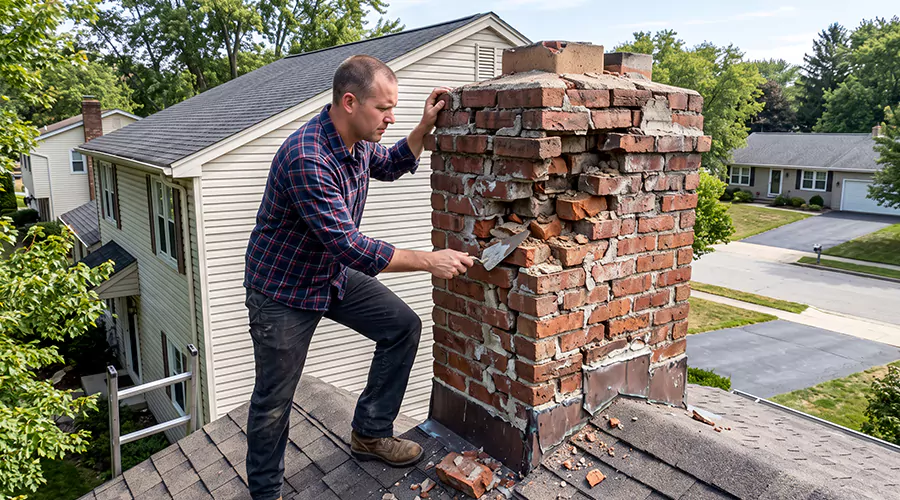
Signs Your Chimney Masonry Is Failing
Recognize signs your chimney masonry is failing, including cracked bricks, crumbling mortar, leaning walls, water damage, loose masonry, and visible gaps




Based on 500+ Reviews

Proudly American
Owned & Operated

Chimney masonry failure is a serious issue that can affect the safety, stability, and performance of a chimney system. Over time, exposure to moisture, temperature changes, weather conditions, and aging can weaken bricks and mortar joints.
Masonry problems often begin with small signs, such as minor cracks or deteriorating mortar, but they can become larger structural issues if they are ignored. Professional chimney masonry repair can address damaged bricks and mortar joints before these problems develop into more serious structural concerns. A failing chimney may allow water to enter the home, damage the fireplace system, and create expensive repair needs.
Recognizing the warning signs of failing chimney masonry can help homeowners address problems before they become severe.
Chimney masonry failure occurs when the bricks, mortar joints, or other masonry components begin losing their strength and ability to protect the chimney structure.
A chimney's masonry system includes:
When these components deteriorate, the chimney may become vulnerable to:
Several factors can cause chimney masonry to weaken over time.
Common causes include:
Identifying the cause of masonry failure is important because repairs should address the underlying problem, not just visible damage.
Cracked bricks are one of the most visible signs that chimney masonry may be failing.
Brick cracks can develop because of:
Small cracks may allow moisture to enter the brick. Over time, trapped water can expand during freezing conditions and make the damage worse.
Signs of cracked brick damage include:
Damaged bricks may need repair or replacement depending on their condition.
Mortar joints hold chimney bricks together and help prevent water from entering the structure.
When mortar begins to fail, you may notice:
Deteriorated mortar can allow water to enter deeper into the chimney and weaken surrounding materials.
Common repair methods include:
Spalling occurs when the outer surface of bricks breaks, flakes, or falls away.
This usually happens because:
Signs of spalling include:
Spalling should be addressed because damaged bricks can absorb more moisture and deteriorate further.
Loose bricks indicate that the mortar or surrounding masonry is no longer providing proper support.
Signs include:
Loose bricks can develop because of:
Loose masonry should be repaired before more bricks become unstable.
White powdery stains on chimney masonry are called efflorescence.
They occur when water moves through brick or mortar and leaves mineral deposits behind as it dries.
Efflorescence may indicate:
While small amounts may not always indicate severe damage, repeated white staining can be a warning sign of ongoing moisture problems.
Water entering the fireplace is a strong indication that the chimney masonry or related components may be failing.
Possible causes include:
Signs include:
Continued water exposure can accelerate masonry deterioration.
A leaning chimney is one of the most serious signs of masonry failure.
A chimney may lean because of:
A leaning chimney should be evaluated because it may indicate instability.
Visible gaps between chimney bricks can indicate failing mortar or movement within the masonry structure.
These gaps can allow:
Even small openings should be monitored because they can become larger over time.
The chimney crown protects the top of a masonry chimney and helps direct water away from the structure. A failing crown can contribute to masonry damage.
Signs include:
When water enters through a damaged crown, it can travel down into the chimney walls and damage bricks and mortar.
Flashing protects the connection between the chimney and roof. When flashing fails, water can enter around the chimney base.
Signs of flashing problems include:
Although flashing is not masonry, flashing failure can contribute to chimney masonry deterioration by allowing moisture exposure.
Finding brick pieces or mortar debris around the chimney area is a warning sign.
It may indicate:
Falling materials should not be ignored because they may indicate an active masonry problem.
The exterior appearance of the chimney can reveal early signs of failure.
Look for:
Changes in the chimney's appearance often indicate that moisture or aging is affecting the masonry.
Homeowners can perform a basic visual check by looking for:
| Area to Check | Warning Signs |
|---|---|
| Bricks | Cracks, spalling, loose pieces |
| Mortar joints | Gaps, crumbling, missing sections |
| Chimney crown | Cracks or deterioration |
| Base of chimney | Water stains or leaks |
| Roof connection | Damaged flashing |
| Surrounding area | Falling debris |
A professional inspection may be needed for hidden problems.
Ignoring masonry problems can lead to:
Small repairs are usually easier and less expensive before the damage spreads.
The repair method depends on the type and severity of damage.
| Problem | Possible Repair |
|---|---|
| Cracked mortar | Tuckpointing or repointing |
| Damaged bricks | Brick replacement |
| Spalling | Masonry repair or replacement |
| Water damage | Moisture source repair |
| Crown damage | Crown repair |
| Extensive deterioration | Masonry restoration |
A chimney inspection helps determine the correct repair approach.
Preventive maintenance can extend the life of chimney masonry.
Helpful steps include:
Keeping moisture away from masonry is one of the most effective ways to prevent deterioration.
Signs of failing chimney masonry include cracked bricks, crumbling mortar, spalling surfaces, loose bricks, water leaks, white stains, and structural movement. Masonry problems usually develop gradually, but ignoring early warning signs can lead to serious chimney damage. Regular inspections and timely repairs help protect the chimney structure, prevent moisture problems, and reduce expensive repairs. Maintaining healthy chimney masonry is an important part of keeping the entire fireplace and chimney system safe and functional.
Early signs include cracked mortar, small brick cracks, white stains, and minor water damage.
Yes. Repairs may include repointing, tuckpointing, brick replacement, or masonry restoration.
Common causes include moisture, freeze-thaw cycles, aging materials, and lack of maintenance.
They can become a problem if ignored because cracks may allow water entry and weaken the structure.
Regular inspections help identify masonry problems early before they become major repairs.
Waterproofing can help reduce moisture absorption, but existing damage must be repaired first.
Recognize signs your chimney masonry is failing, including cracked bricks, crumbling mortar, leaning walls, water damage, loose masonry, and visible gaps
